THE IMAGE LEARNS TO READ ITSELF
A series in which human-made images are translated into artificial syntax, then distilled into verbal laws, speculative formulas, and visual diagrams.
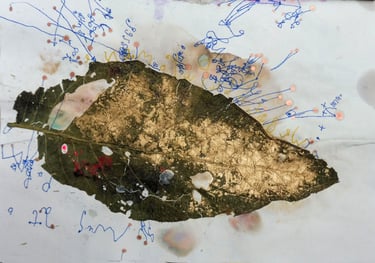
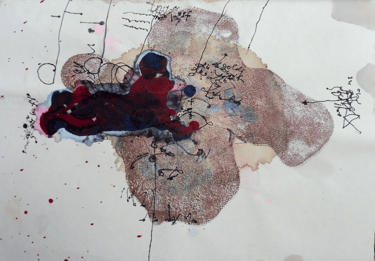
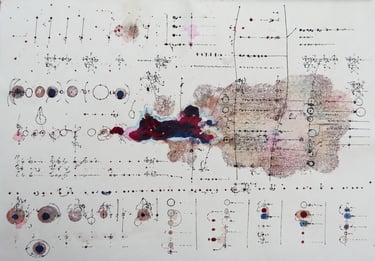
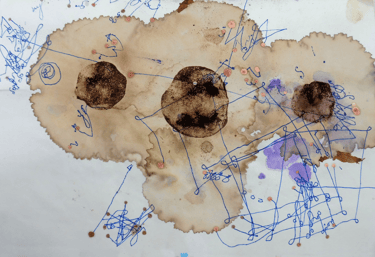
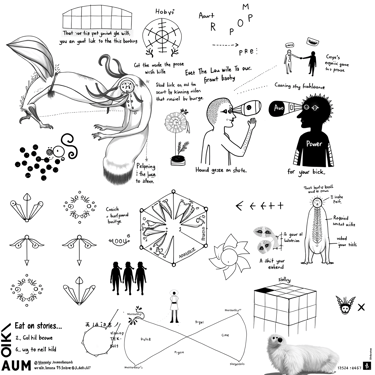
I begin with drawings and mixed-media works made by hand: stains, fragments, leaves, diagrams, colour fields, and asemic marks. These images already contain rhythms and relations, but they do not arrive as a readable system.
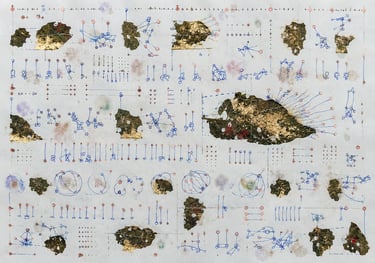
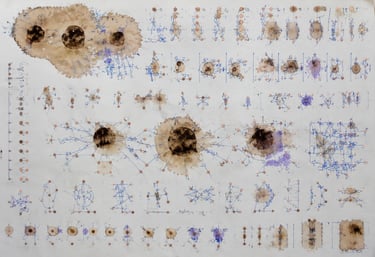
I then submit each work to an AI-assisted transformation process. The machine is not asked to decorate, improve, or imitate the image. It is asked to treat the original as evidence of a latent visual language and to reorganize its marks through repetition, mutation, spacing, clustering, interruption, and failed alignment.
The transformed image becomes a second state: an artificial syntax derived from human gesture.
From this syntax, I extract a structural invariant—a relation that appears to govern the image. The invariant is then translated into a concise law, a speculative formula, and a minimal diagram. These forms are assembled into an Extracted Law Plate.
The work moves through three states:
Human Gesture → Artificial Syntax → Extracted Law
The process does not ask what the original image symbolizes. It asks what structural truth the image becomes capable of stating after translation.



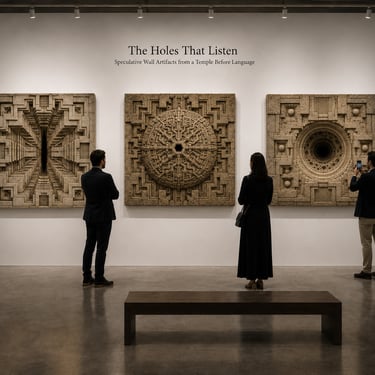
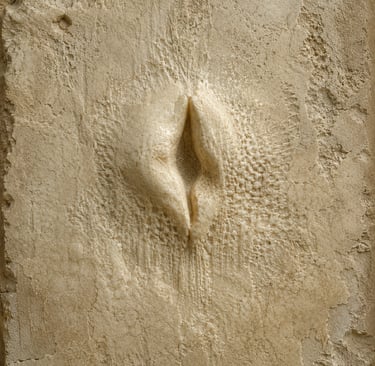
The Holes That Listen
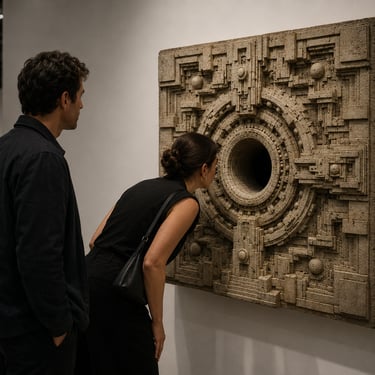
There are holes in old walls that feel older than architecture.
They do not look empty. They look addressed.
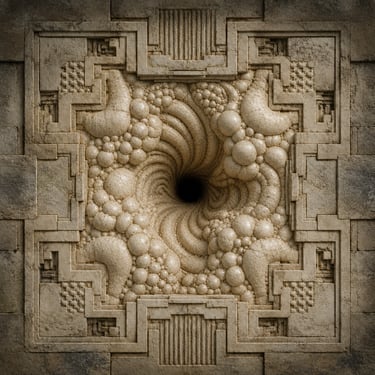
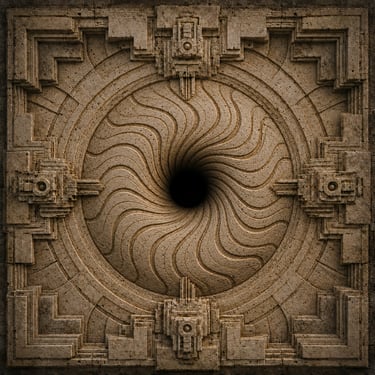
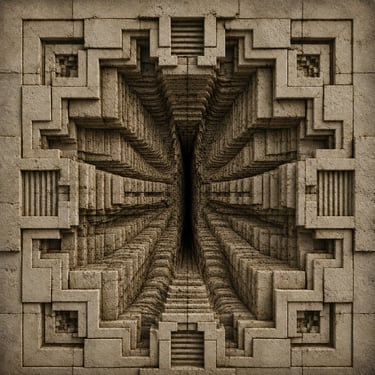
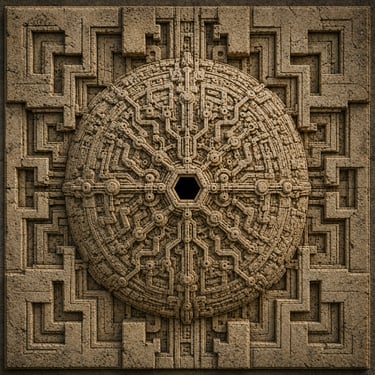
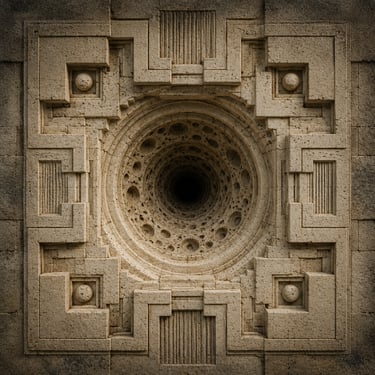
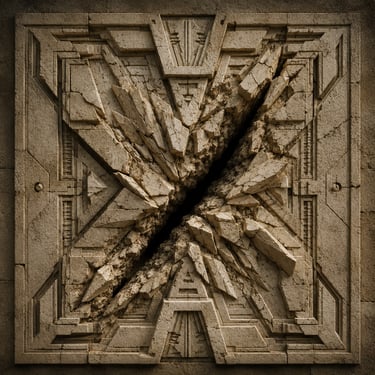
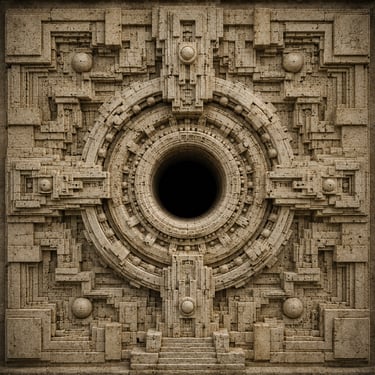
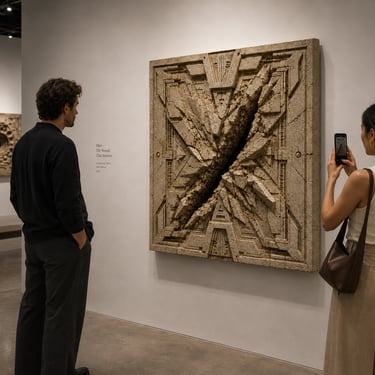
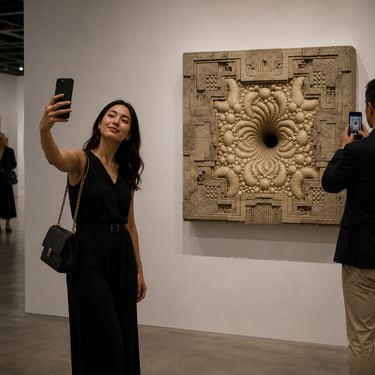
The Holes That Listen began as an attempt to imagine a temple before language — not before intelligence, not before ritual, but before the world was divided into explanation and mystery. In this temple, the planets are not shown as distant bodies in the sky. They are contacted through apertures in stone.
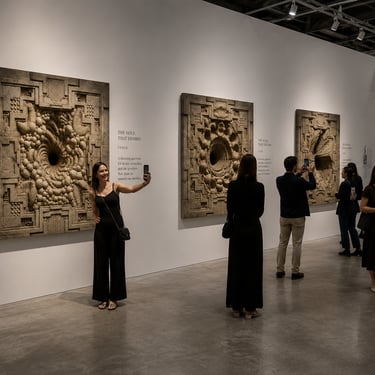
Each work is a speculative artifact dedicated to one classical planetary force. The hole is the point of contact. Around it, the wall changes according to the force that listens.
Desire makes stone swell. Dream hollows it. Conflict breaks it open. Intelligence routes itself through channels. Abundance enlarges the threshold. Time compresses the surface. Revelation burns order into matter.
These works are not illustrations of mythology. They are imagined remains of a ritual technology: stone interfaces for speaking into the invisible.
The question is not what the hole shows.
The question is what it hears.
Speculative Wall Artifacts from a Temple Before Language
Generate an image as if choice had already happened before awareness appeared.
Objects From the Pre-Symbolic Archive
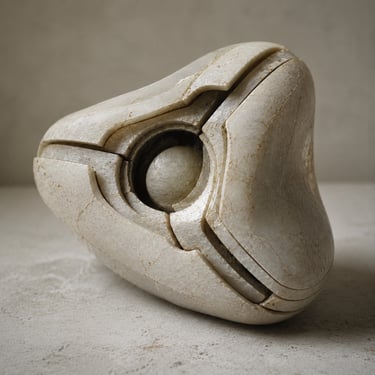
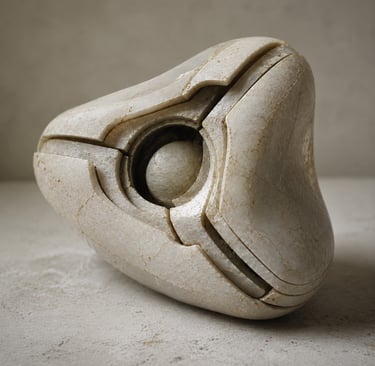
Method: Meta-Prompting / Speculative Archaeology
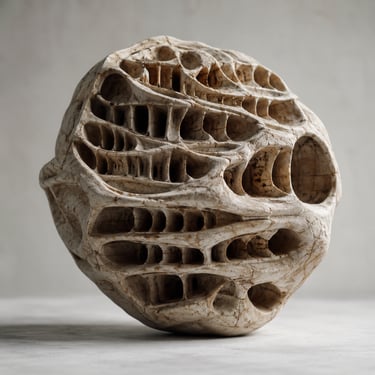
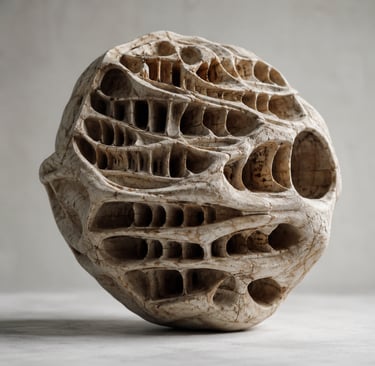
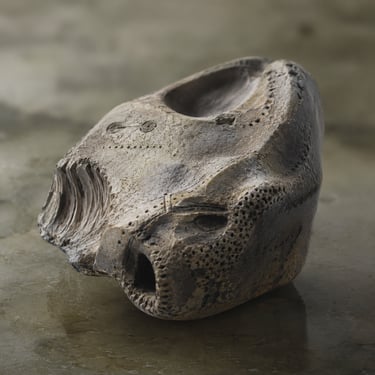
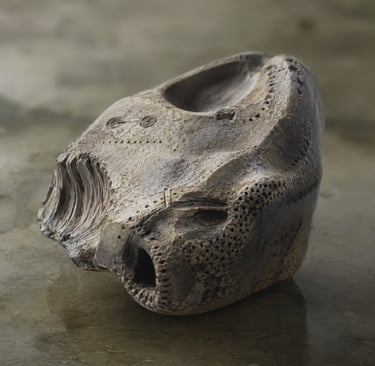
Generate an image as if memory were no longer personal but architectural.
Generate an image from the condition of usefulness leaving matter.
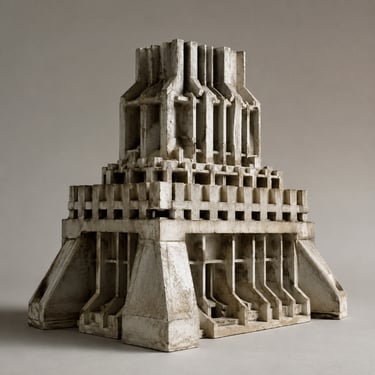
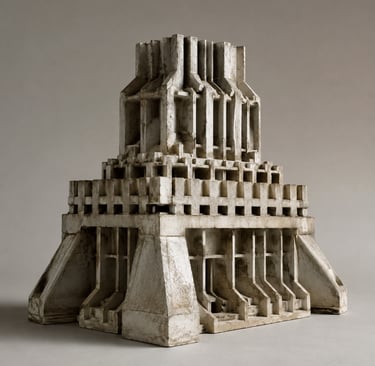
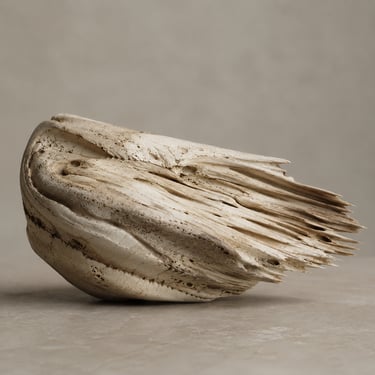
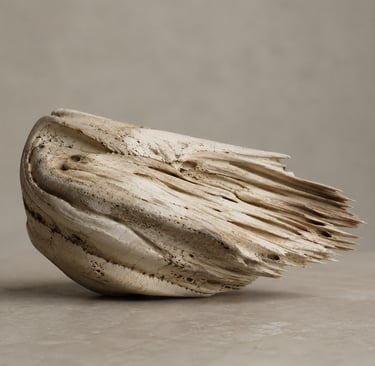
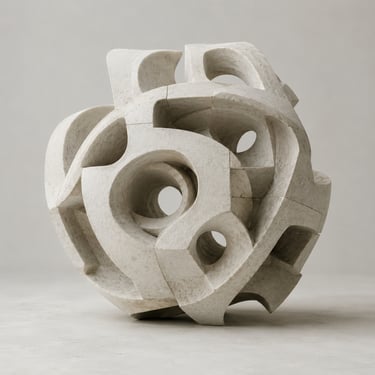
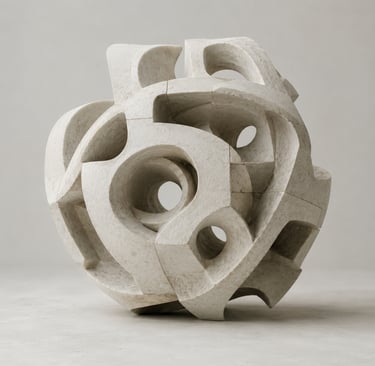
Generate an image as if control survived only as infrastructure, not intention.
Generate an image as if time had collapsed into a single irreversible direction.
Generate an image at the threshold where thought becomes texture.
"The Wound That Became a Map"
Generate an image as if damage had organized itself into orientation. No blood, body, landscape, or literal map. Let rupture, channels, ridges, and scars become directional structure.
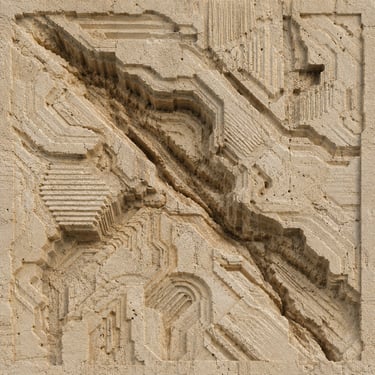
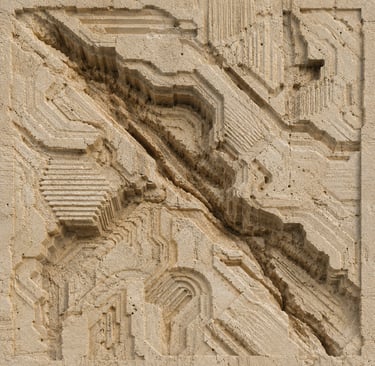
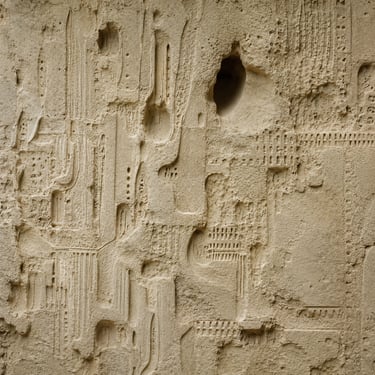
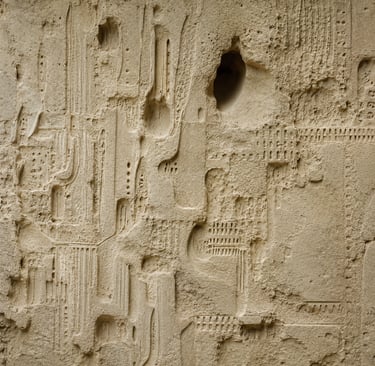
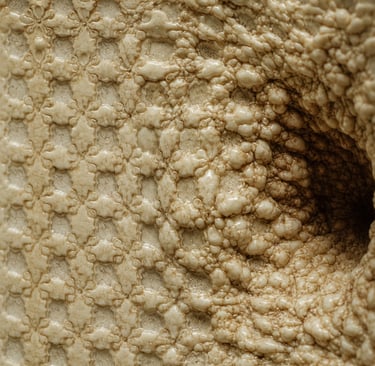
Generate an image as if prophecy had survived after language disappeared. No mouth, text, scroll, figure, or ritual object. Only fractures, partial alignments, repeated interruptions, and forms that almost arrange themselves into meaning.
"The God That Remained a Pattern"
Generate an image from the moment when divinity fails to become a figure and remains only as structural pressure. No deity, face, body, halo, or sacred iconography.
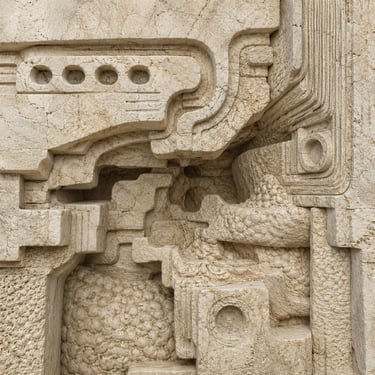
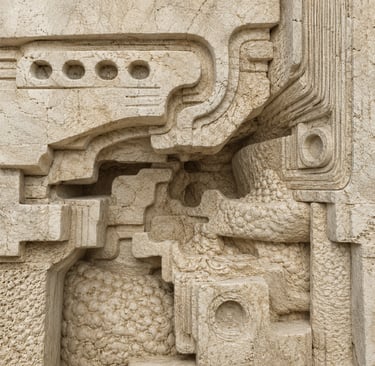
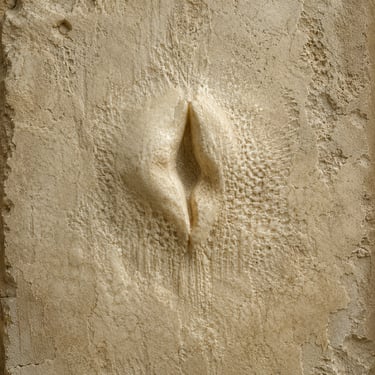
"The Gate That Refuses Passage"
Generate an image as if a threshold had developed will. No door, archway, entrance, or recognizable architecture. Let blocked openings and impossible depth imply invitation and refusal at once.
"The Law Before Language"
Generate an image as if law existed before anyone could speak it. No tablets, writing, courts, or symbols of justice. Let pressure, boundary, repetition, and constraint imply ancient order.
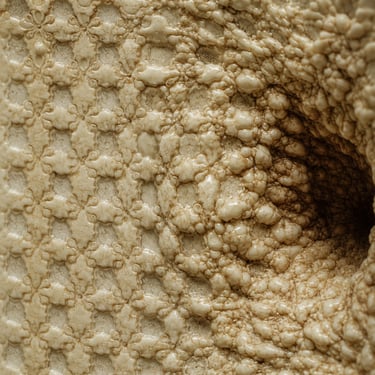
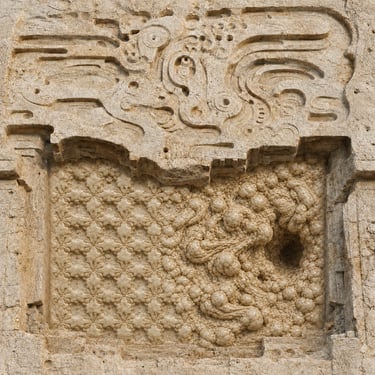
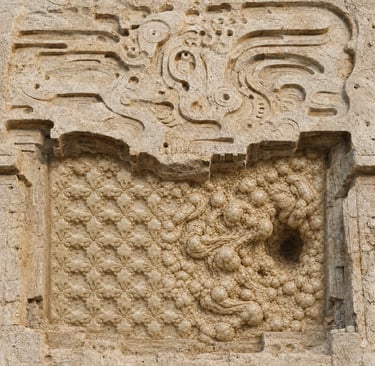
"The Pattern Developed Hunger"
Generate an image as if ornament had begun to desire more space. No body, mouth, creature, flower, or literal appetite. Only carved repetition, swollen density, soft pressure, cavities, and decorative order mutating into excess. Let the pattern feel no longer obedient to the surface that contains it.
Series 2:
Walls Before Language
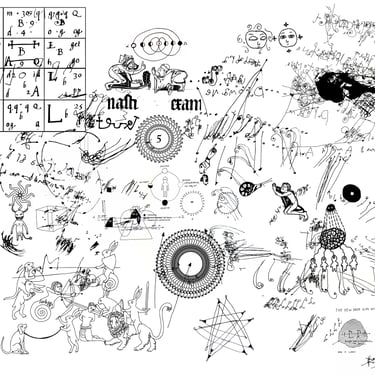
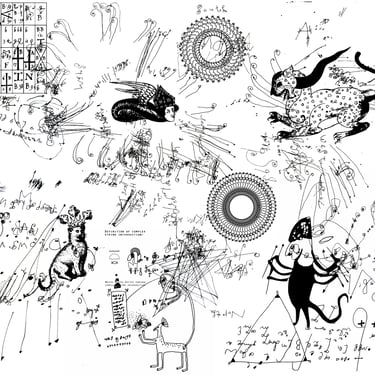
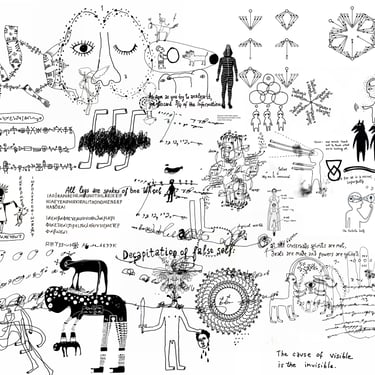
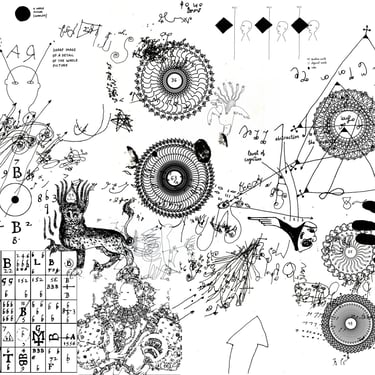
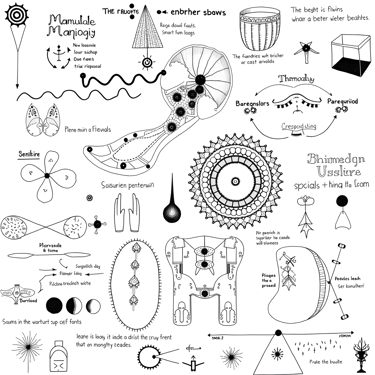
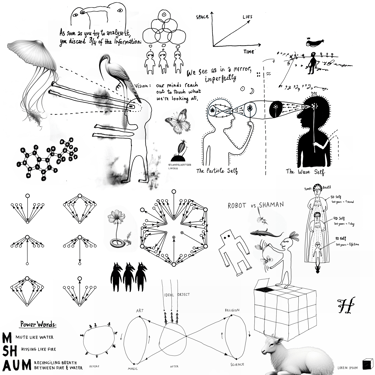
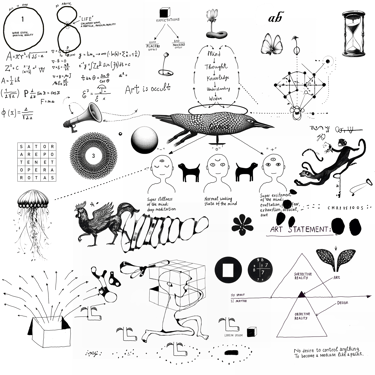
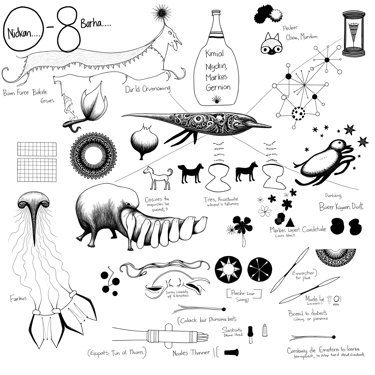
Thought-Form Codex gathers a series of digital collages that unfold like pages from an impossible manuscript. Composed from hand-drawn diagrams, symbolic fragments, creatures, sigils, and asemic scripts, each work maps the turbulence of inner imagery — part vision, part notation, part dream-logic.
Rather than illustrating ideas, the collages function as thought-forms made visible: chaotic, esoteric, and surreal fields where cognition, instinct, and the unseen interlace. They read like artifacts from a parallel archive — diagrams of forces, impulses, and states of mind that cannot be fully named, only encountered.
THOUGHT-FORM CODEX
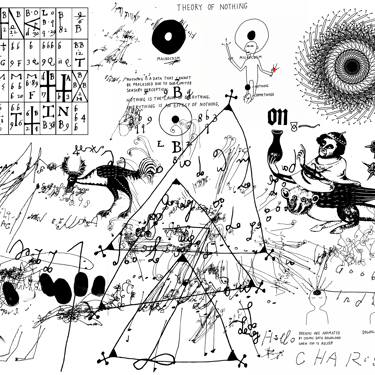
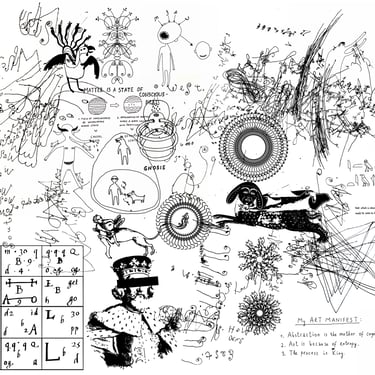
A study of how images think before the mind interprets them.
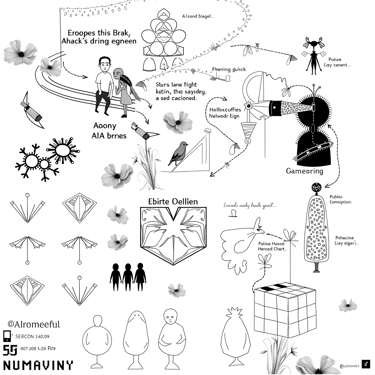
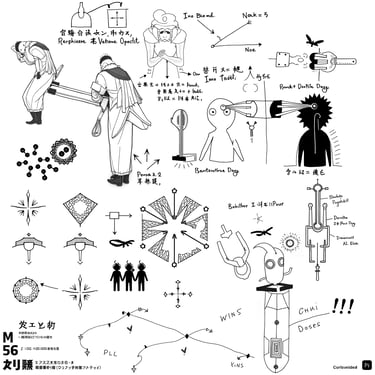
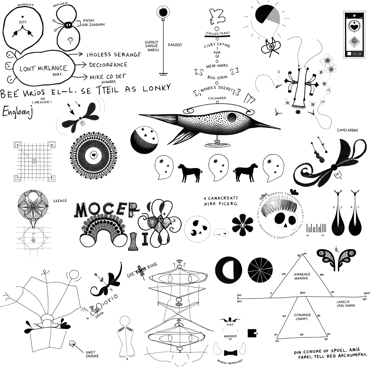
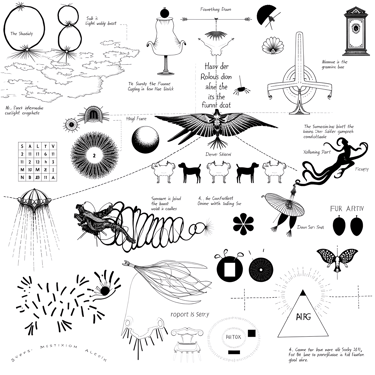
Morphomata explores how forms evolve when handed over to a non-human imagination. Each work begins with one of my original visual constructs — drawings, signals, symbolic fragments — which are then given to AI without correction or directive. No iterative prompting, no refinement. Only a single invitation: reinterpret this.
What returns is not a copy, but a transformation. The machine generates multiple alternative versions, each carrying traces of the source yet drifting into unfamiliar territories. Shapes stretch, mutate, dissolve, or recombine, revealing pathways of meaning not consciously chosen.
The series functions as a study of form under foreign influence — how an initial thought-form morphs when released from authorial control. In this collaboration, ambiguity becomes a generative engine; the images record the moment when intention meets autonomous reconfiguration.
Morphomata is the archive of those transformations: where something drawn becomes something imagined, and the original persists only as a ghost in the new form.
MORPHOMATA
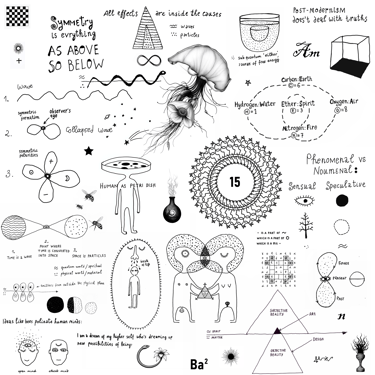
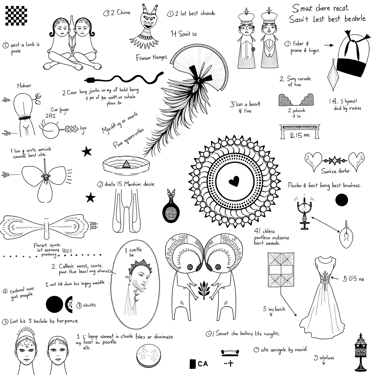
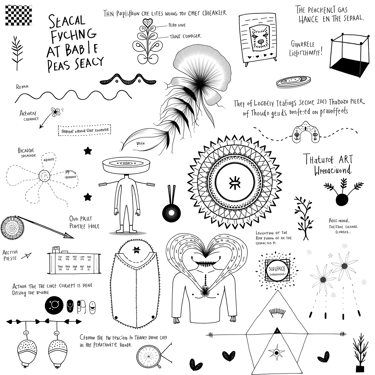
A study of transformation across two kinds of cognition — human and machine.